Should You Live in Wellington’s Equestrian Community Year-Round?
If you are considering Wellington’s equestrian neighborhoods, one question tends to shape everything else: do you want a winter base, or a home that works every month of the year? That choice affects not only your lifestyle, but also the kind of property, access, and upkeep that will fit you best. In Wellington, both paths can work beautifully, but they serve different needs. Let’s look at how seasonal and year-round living really compare.
Wellington’s official equestrian area is the Equestrian Preserve Area, often called the EPA. According to village materials, it covers roughly 9,000 acres in the western and southern parts of Wellington and includes Wellington International, the National Polo Center, bridle trails, and a mix of equestrian farms and facilities.
The village’s stated goal is to support a year-round world-class equestrian community. That matters if you are trying to decide whether Wellington is simply a seasonal destination or a place where full-time equestrian living truly works. The answer is that it can be both.
Wellington feels most active during the winter season. Village materials say the equestrian season begins in November and runs through April, with nearly 13,000 horses in the community during peak season.
This is also when the social calendar is at its fullest. Wellington International says the Winter Equestrian Festival runs for 13 weeks from January through March, while the Adequan Global Dressage Festival runs for 10 weeks during the same general period.
For many buyers, that winter rhythm is the main draw. You can be close to the rings, events, and energy that make Wellington internationally known, then step away when the season slows.
Village planning documents describe equestrian communities that attract both seasonal and full-time residents. They also reference established enclaves such as Palm Beach Polo, Mallet Hill, Southfields, and Equestrian Club Estates, along with newer concepts that include small farms, custom homesites, and townhomes.
In practical terms, many seasonal buyers are looking for ease. A home near the venues, with simpler upkeep and efficient access, can make the winter circuit far more enjoyable than a larger property that requires year-round management.
One village site plan notes that many residents in Equestrian Club Estates were drawn by proximity to the showgrounds, actively compete, and primarily use golf carts for transportation. That detail gives helpful context for how a seasonal lifestyle often works in this part of Wellington.
Not every equestrian buyer needs acreage, barns, and a full training setup on site. For some households, the best fit is a low-maintenance residence that keeps you close to the showgrounds without the added responsibilities of operating a larger horse property.
Wellington’s trail system also supports that flexibility. The village says the trails are designed not only for riding, but also for hiking, biking, running, and transportation, which means you can stay connected to the equestrian environment even if you do not own a large farm.
A common misconception is that Wellington quiets down completely after March. The winter circuit is clearly the peak, but the equestrian calendar does not stop there.
Wellington International’s 2026 schedule includes summer and fall hunter and jumper shows at Equestrian Village in August, September, October, and early November. Competition also continues from May through October at Equestrian Village, which gives year-round residents an ongoing training and show rhythm.
If you plan to live in Wellington full time, that consistency matters. You are not simply buying into a short season. You are buying into an active equestrian environment that continues well beyond winter.
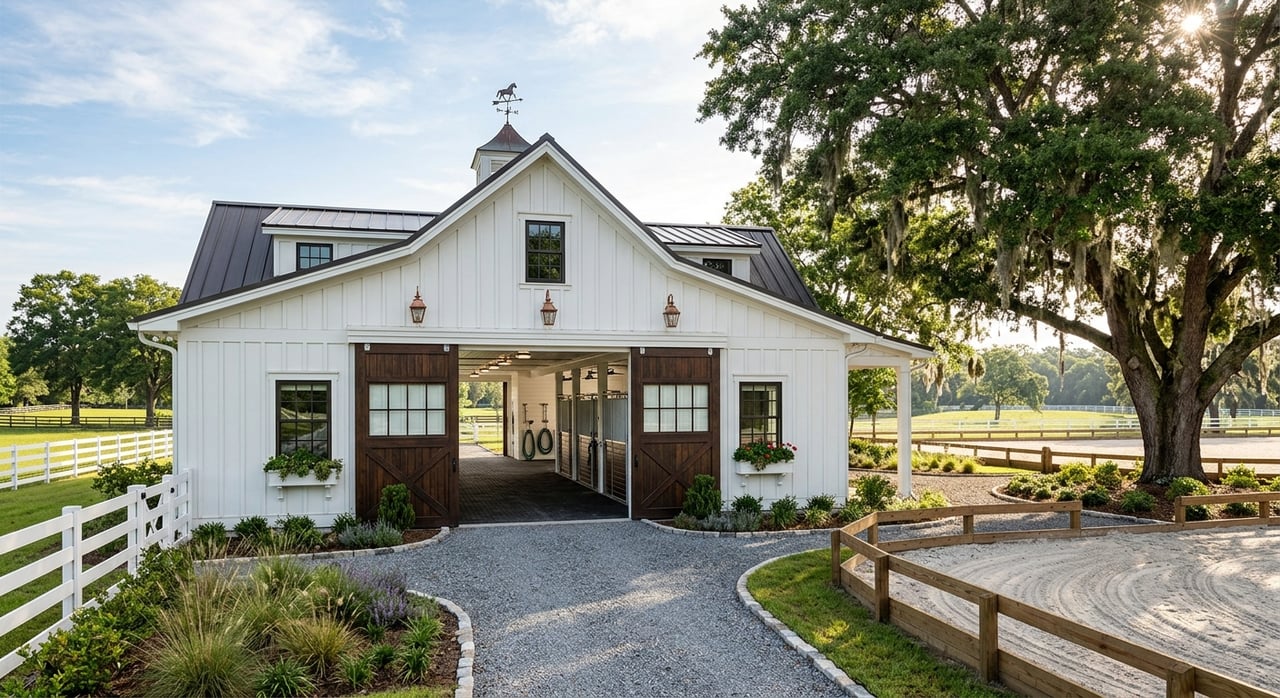
For year-round households, Wellington tends to function less like a seasonal retreat and more like an operating base. Village documents describe an equestrian district where residents walk, ride, or use golf carts to reach sporting events, and where residential areas are intentionally integrated with barns and showgrounds.
That setup can be a major advantage if your daily routine involves training, horse care, hauling equipment, or managing a busy family schedule around the barn. In that case, proximity is not just a luxury. It is part of how the property performs for you every day.
A year-round equestrian property needs to do more than look appealing during show season. Function becomes central.
Village guidance for equestrian residents highlights advance planning for barns, horses, and evacuation during hurricane season. For permanent ownership in South Florida, storm readiness, storage, and property design are all important parts of the conversation.
That means year-round buyers often focus on questions like these:
These are very different priorities from those of a buyer seeking a winter pied-a-terre near the action.
The clearest divide in Wellington is often the difference between a winter residence and an operational equestrian property. Both can be excellent choices, but they solve different problems.
Seasonal buyers often do best with homes that offer:
Year-round buyers often need features such as:
Village planning documents support this range of options by describing communities with small farms, custom homesites, townhomes, and larger equestrian lots. That variety is one reason Wellington can serve both the seasonal rider and the full-time horse family.
A seasonal approach may make sense if your main goal is to be in Wellington during the busiest months. You may value convenience, social energy, and quick access to major venues more than you value owning and operating a larger farm all year.
This option can also suit buyers who split time between multiple homes and want a Wellington property that feels efficient, polished, and easy to manage during shorter stays.
Year-round ownership may be the better path if Wellington is part of your daily routine, not just your winter calendar. If you want a home that supports horses, training, and full-time logistics, then infrastructure and location within the equestrian fabric become much more important.
It can also be the right fit if you want to enjoy Wellington beyond its peak social season. The area includes both competition venues and everyday horse properties, and village materials make clear that the equestrian community is not limited to elite competitors.
The choice between seasonal and year-round living shapes more than your address. It influences how you spend your time, how much property you need, what kind of upkeep makes sense, and how closely you want to live to Wellington’s venues and trail network.
In a market like Wellington, the smartest move is often to begin with your lifestyle, then match the property to it. A beautifully located seasonal residence can be the right answer for one buyer, while a fully functional horse property may be essential for another.
If you are weighing Wellington’s equestrian neighborhoods and want a thoughtful, tailored approach, White Horse Group can help you narrow the field and find the property that fits the way you actually live.


White Horse Group is a boutique real estate and design collective delivering luxury service, local expertise, and elevated style to every home and client we serve.
WHITE HORSE GROUP
ADDRESS
1795 9TH ST N
NAPLES, FL 34102